Monitor and Control Project Work compares actual performance against the plan across all areas, turning raw work performance information into work performance reports that inform decisions. It is the integrative monitoring process that keeps the big picture in view.
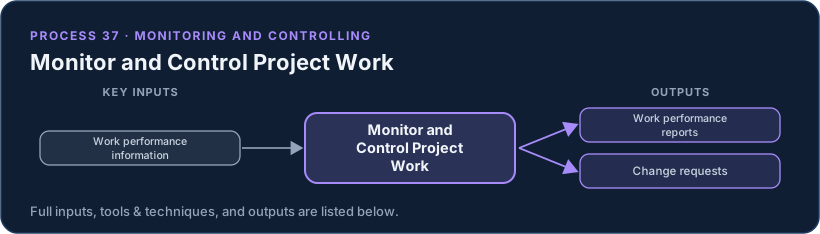
Variance, trend, and earned value analysis reveal where the project is drifting, and forecasts project where it is heading. When performance diverges from the plan, this process raises the change requests that feed integrated change control.
Common pitfalls. Reporting status without forecasting where things are heading; reacting to single data points instead of trends; vanity reporting that hides problems; and monitoring without translating findings into corrective action.
Inputs, Tools & Techniques, and Outputs
Inputs
- Project management plan
- Project documents
- Work performance information
- Agreements
- Enterprise environmental factors
- Organizational process assets
Tools & Techniques
- Expert judgment
- Data analysis
- Decision making
- Meetings
Outputs
- Work performance reports
- Change requests
- Project management plan updates
- Project documents updates
How This Process Connects
Every process hands artifacts to other processes. Follow the flow of this one:
Where its inputs come from
- Validate Scopeproduces: Work performance information
- Control Scopeproduces: Work performance information
- Control Scheduleproduces: Work performance information
- Control Costsproduces: Work performance information
- Control Qualityproduces: Work performance information
- Control Resourcesproduces: Work performance information
Where its outputs go
- Perform Integrated Change Controluses: Change requests, Work performance reports
- Manage Teamuses: Work performance reports
- Manage Communicationsuses: Work performance reports
- Monitor Risksuses: Work performance reports
More in Project Integration Management
In the Domains & Principles View
The PMBOK® Guide frames this work through performance domains and principles:
In the Eighth Edition
In the Eighth Edition, Monitor and Control Project Work is renamed Monitor and Control Project Performance and sits in the Governance performance domain. 'Work' becomes 'Performance' — consistent with the edition's outcomes-over-outputs framing.