Control Quality inspects and tests deliverables to confirm they meet the quality metrics and acceptance criteria. Its key output is verified deliverables — work confirmed correct, which then goes to Validate Scope for customer acceptance — along with quality control measurements.
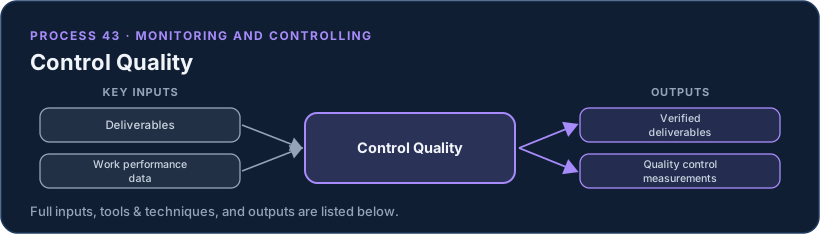
Inspection, testing, control charts, and root-cause analysis find both defects and the patterns behind them. Control Quality is about the deliverables themselves, whereas Manage Quality is about the processes producing them.
Common pitfalls. Confusing Control Quality (inspecting deliverables) with Manage Quality (assuring processes); inspecting without acting on root causes; poor sampling; and treating a one-time pass as proof of ongoing quality.
Inputs, Tools & Techniques, and Outputs
Inputs
- Project management plan
- Project documents
- Approved change requests
- Deliverables
- Work performance data
- Enterprise environmental factors
- Organizational process assets
Tools & Techniques
- Data gathering
- Data analysis
- Inspection
- Testing/product evaluations
- Data representation
- Meetings
Outputs
- Quality control measurements
- Verified deliverables
- Work performance information
- Change requests
- Project management plan updates
- Project documents updates
How This Process Connects
Every process hands artifacts to other processes. Follow the flow of this one:
Where its inputs come from
- Direct and Manage Project Workproduces: Deliverables, Work performance data
- Perform Integrated Change Controlproduces: Approved change requests
- Develop Project Management Planproduces: Project management plan
Where its outputs go
- Validate Scopeuses: Verified deliverables
- Monitor and Control Project Workuses: Work performance information
- Perform Integrated Change Controluses: Change requests
More in Project Quality Management
In the Domains & Principles View
The PMBOK® Guide frames this work through performance domains and principles:
In the Eighth Edition
In the Eighth Edition, Control Quality is merged with Validate Scope into one process, Validate Scope, in the Scope performance domain. Section 2.2.2.6 gives Validate Scope two objectives: checking against quality standards and formal acceptance. That first objective is PMBOK 6's Control Quality.