Perform Integrated Change Control is the single, disciplined point where change requests are evaluated and approved or rejected — often by a change control board. Its purpose is to ensure changes are assessed holistically for their impact on scope, schedule, cost, quality, resources, and risk before anything is altered.
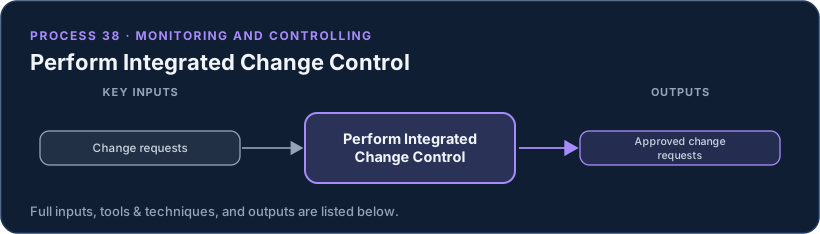
Every change request runs through here, and only approved changes are implemented. The process protects the integrity of the baselines: changes are reflected consistently across all of them, and the change log keeps an auditable record.
Common pitfalls. Informal changes that bypass the process; evaluating a change’s impact on only one dimension, like scope but not risk; a change board that either rubber-stamps or bottlenecks; and failing to update all affected baselines and documents.
Inputs, Tools & Techniques, and Outputs
Inputs
- Project management plan
- Project documents
- Work performance reports
- Change requests
- Enterprise environmental factors
- Organizational process assets
Tools & Techniques
- Expert judgment
- Change control tools
- Data analysis
- Decision making
- Meetings
Outputs
- Approved change requests
- Project management plan updates
- Project documents updates
How This Process Connects
Every process hands artifacts to other processes. Follow the flow of this one:
Where its inputs come from
- Identify Stakeholdersproduces: Change requests
- Define Activitiesproduces: Change requests
- Develop Scheduleproduces: Change requests
- Plan Risk Responsesproduces: Change requests
- Plan Procurement Managementproduces: Change requests
- Direct and Manage Project Workproduces: Change requests
Where its outputs go
- Direct and Manage Project Workuses: Approved change requests
- Control Qualityuses: Approved change requests
- Control Procurementsuses: Approved change requests
More in Project Integration Management
In the Domains & Principles View
The PMBOK® Guide frames this work through performance domains and principles:
In the Eighth Edition
In the Eighth Edition, Perform Integrated Change Control is renamed Assess and Implement Changes and sits in the Governance performance domain. Section 2.1.6.8 splits into predictive (2.1.6.8.1) and adaptive (2.1.6.8.2) treatments.