Plan Risk Responses decides what to do about each significant risk: for threats, avoid, mitigate, transfer, escalate, or accept; for opportunities, exploit, enhance, share, escalate, or accept. Each response is sized to the risk, assigned an owner, and folded back into the plan and budget.
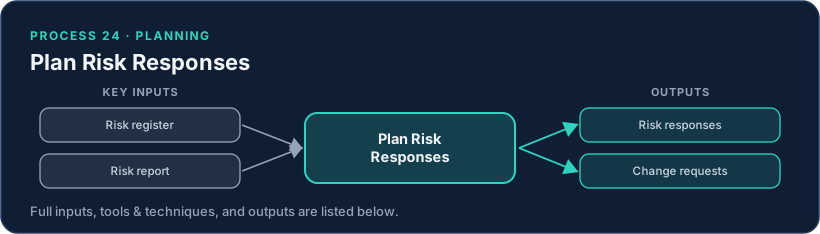
Contingency and fallback plans handle risks that materialize, while contingency reserves are set for accepted risks. Because responses change scope, schedule, or cost, they generate change requests and updates across the baselines.
Common pitfalls. Generic responses not matched to the specific risk; responses with no owner; ignoring the cost of the response versus the risk it addresses; and planning for threats only while leaving opportunities on the table.
Inputs, Tools & Techniques, and Outputs
Inputs
- Project management plan
- Project documents
- Enterprise environmental factors
- Organizational process assets
Tools & Techniques
- Expert judgment
- Data gathering
- Interpersonal and team skills
- Strategies for threats
- Strategies for opportunities
- Contingent response strategies
- Strategies for overall project risk
- Data analysis
- Decision making
Outputs
- Change requests
- Project management plan updates
- Project documents updates
How This Process Connects
Every process hands artifacts to other processes. Follow the flow of this one:
Where its inputs come from
- Develop Project Management Planproduces: Project management plan
Where its outputs go
- Perform Integrated Change Controluses: Change requests
More in Project Risk Management
In the Domains & Principles View
The PMBOK® Guide frames this work through performance domains and principles:
In the Eighth Edition
Plan Risk Responses keeps its name in the Eighth Edition. It is one of the 40 processes and sits in the Risk performance domain.