Plan Procurement Management determines what will be acquired from outside the project and how. Make-or-buy analysis decides what to procure; the process then defines contract types, the procurement strategy, bid documents, statements of work, and source-selection criteria.
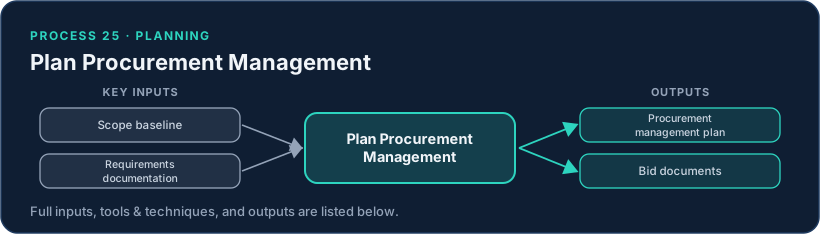
Getting procurement planning right early matters because lead times and contracts are hard to compress later. The plan also coordinates procurement timing with the project schedule so externally sourced work arrives when it is needed.
Common pitfalls. Underestimating procurement lead times; vague statements of work that invite disputes; choosing a contract type that misallocates risk; and weak source-selection criteria that make evaluation subjective.
Inputs, Tools & Techniques, and Outputs
Inputs
- Project charter
- Business documents
- Project management plan
- Project documents
- Enterprise environmental factors
- Organizational process assets
Tools & Techniques
- Expert judgment
- Data gathering
- Data analysis
- Source selection analysis
- Meetings
Outputs
- Procurement management plan
- Procurement strategy
- Bid documents
- Procurement statement of work
- Source selection criteria
- Make-or-buy decisions
- Independent cost estimates
- Change requests
- Project documents updates
- Organizational process assets updates
How This Process Connects
Every process hands artifacts to other processes. Follow the flow of this one:
Where its inputs come from
- Develop Project Charterproduces: Project charter
- Develop Project Management Planproduces: Project management plan
Where its outputs go
- Perform Integrated Change Controluses: Change requests
More in Project Procurement Management
In the Domains & Principles View
The PMBOK® Guide frames this work through performance domains and principles:
In the Eighth Edition
In the Eighth Edition, Plan Procurement Management is renamed Plan Sourcing Strategy and sits in the Governance performance domain. Procurement planning survives as sourcing strategy inside Governance; the rest of procurement moves to Appendix X4. 'Sourcing Strategy' is also a Governance key concept (2.1.5.4).