Manage Project Knowledge ensures the project uses what is already known and captures what it learns. It covers both explicit knowledge — documents and data — and the harder-to-pin-down tacit knowledge held by people, surfaced through conversation, networking, and facilitation.
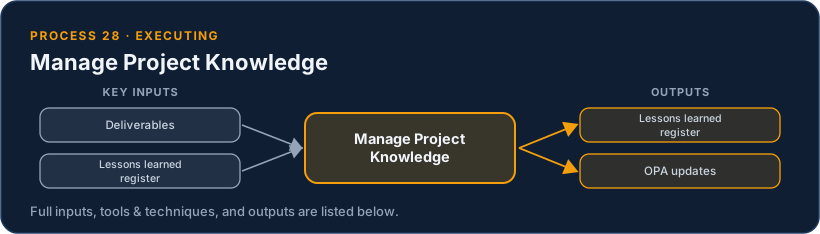
The lessons learned register is updated throughout, not just at closeout, so insights can be applied while the project is still running. Knowledge that stays in one person’s head benefits no one; the point is to make it shareable and reusable.
Common pitfalls. Treating lessons learned as a closeout formality; capturing only explicit documents and losing tacit know-how; no mechanism to actually reuse knowledge; and a register nobody reads.
Inputs, Tools & Techniques, and Outputs
Inputs
- Project management plan
- Project documents
- Deliverables
- Enterprise environmental factors
- Organizational process assets
Tools & Techniques
- Expert judgment
- Knowledge management
- Information management
- Interpersonal and team skills
Outputs
- Lessons learned register
- Project management plan updates
- Organizational process assets updates
How This Process Connects
Every process hands artifacts to other processes. Follow the flow of this one:
Where its inputs come from
- Direct and Manage Project Workproduces: Deliverables
- Develop Project Management Planproduces: Project management plan
More in Project Integration Management
In the Domains & Principles View
The PMBOK® Guide frames this work through performance domains and principles:
In the Eighth Edition
Manage Project Knowledge keeps its name in the Eighth Edition. It is one of the 40 processes and sits in the Governance performance domain.