Close Project or Phase formally concludes the work: confirming deliverables are accepted, settling contracts, releasing resources, archiving documents, capturing lessons learned, and transitioning the final product, service, or result to the customer or operations. The final report summarizes outcomes against objectives.
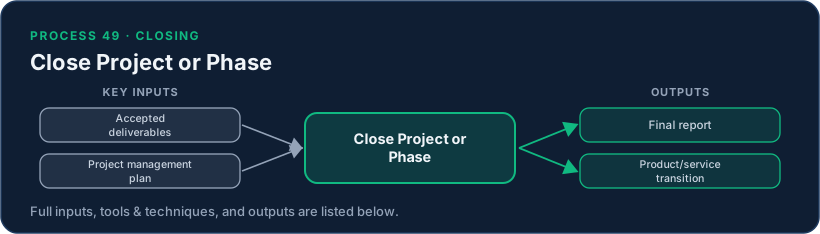
Closure is administrative but important: it confirms the project met its goals, frees up people and budget, and preserves knowledge for future projects. Phase closure applies the same discipline at the end of each phase, not just at project end.
Common pitfalls. Skipping closure when the team rushes to the next project; lessons learned that are never captured or reused; leaving contracts or resources formally open; and no confirmation that the intended benefits were actually realized.
Inputs, Tools & Techniques, and Outputs
Inputs
- Project charter
- Project management plan
- Project documents
- Accepted deliverables
- Business documents
- Agreements
- Procurement documentation
- Organizational process assets
Tools & Techniques
- Expert judgment
- Data analysis
- Meetings
Outputs
- Project documents updates
- Final product, service, or result transition
- Final report
- Organizational process assets updates
How This Process Connects
Every process hands artifacts to other processes. Follow the flow of this one:
Where its inputs come from
- Validate Scopeproduces: Accepted deliverables
- Conduct Procurementsproduces: Agreements
- Develop Project Charterproduces: Project charter
- Develop Project Management Planproduces: Project management plan
More in Project Integration Management
In the Domains & Principles View
The PMBOK® Guide frames this work through performance domains and principles:
In the Eighth Edition
Close Project or Phase keeps its name in the Eighth Edition. It is one of the 40 processes and sits in the Governance performance domain. The only Closing-focus-area process in the entire Eighth Edition.