Direct and Manage Project Work is where the plan becomes reality: the PM leads the team to produce the deliverables, implements approved changes, and manages the day-to-day flow of work. It generates the deliverables and the work performance data that monitoring and controlling processes analyze.
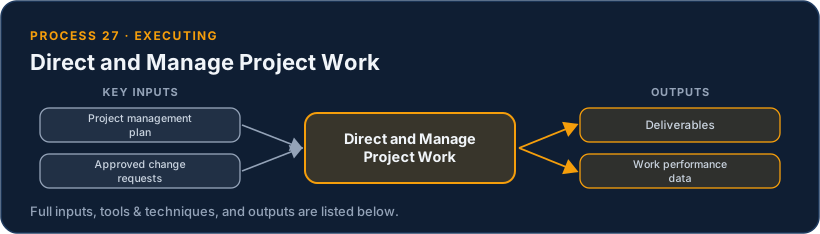
Much of the PM’s effort here is integration and issue management — keeping work aligned with the plan, logging and resolving issues, and raising change requests when reality diverges. Approved change requests from integrated change control are implemented here.
Common pitfalls. Letting work drift from the plan without raising changes; weak issue tracking, so problems fester; implementing changes that were never formally approved; and failing to capture the work performance data needed for control.
Inputs, Tools & Techniques, and Outputs
Inputs
- Project management plan
- Project documents
- Approved change requests
- Enterprise environmental factors
- Organizational process assets
Tools & Techniques
- Expert judgment
- Project management information system
- Meetings
Outputs
- Deliverables
- Work performance data
- Issue log
- Change requests
- Project management plan updates
- Project documents updates
- Organizational process assets updates
How This Process Connects
Every process hands artifacts to other processes. Follow the flow of this one:
Where its inputs come from
- Perform Integrated Change Controlproduces: Approved change requests
- Develop Project Management Planproduces: Project management plan
Where its outputs go
- Perform Integrated Change Controluses: Change requests
- Manage Project Knowledgeuses: Deliverables
- Control Qualityuses: Deliverables, Work performance data
- Validate Scopeuses: Work performance data
- Control Scopeuses: Work performance data
- Control Scheduleuses: Work performance data
More in Project Integration Management
In the Domains & Principles View
The PMBOK® Guide frames this work through performance domains and principles:
In the Eighth Edition
In the Eighth Edition, Direct and Manage Project Work is renamed Manage Project Execution and sits in the Governance performance domain.