Developing the charter turns an idea or business case into an authorized project. The sponsor, not the PM, issues it, but the PM usually drafts it, and it is the document that names the PM and grants authority to spend resources. It captures the high-level purpose, objectives, success criteria, key stakeholders, and constraints — just enough to align everyone on what the project is and why it exists.
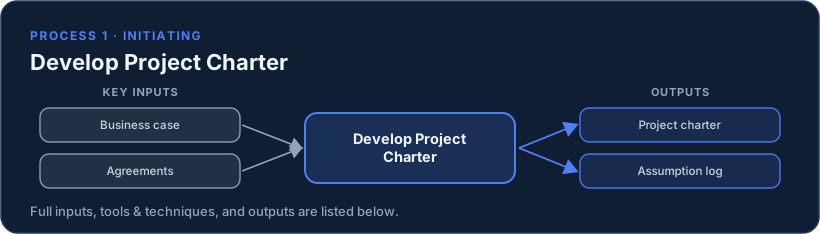
The real work is alignment: linking the project to strategic objectives, agreeing measurable success criteria, and surfacing the assumptions and constraints people are quietly carrying. The PM gathers the business case and any agreements, then facilitates the conversations that turn vague intent into a signed mandate.
Common pitfalls. Treating the charter as paperwork to rush past; vague objectives with no measurable success criteria; starting real work before authorization exists; and a charter that names a PM without actually granting authority to decide.
Inputs, Tools & Techniques, and Outputs
Inputs
- Business documents
- Agreements
- Enterprise environmental factors
- Organizational process assets
Tools & Techniques
- Expert judgment
- Data gathering
- Interpersonal and team skills
- Meetings
Outputs
- Project charter
- Assumption log
How This Process Connects
Every process hands artifacts to other processes. Follow the flow of this one:
Where its inputs come from
- Conduct Procurementsproduces: Agreements
Where its outputs go
- Identify Stakeholdersuses: Project charter
- Develop Project Management Planuses: Project charter
- Plan Scope Managementuses: Project charter
- Collect Requirementsuses: Project charter
- Define Scopeuses: Project charter
- Plan Schedule Managementuses: Project charter
More in Project Integration Management
In the Domains & Principles View
The PMBOK® Guide frames this work through performance domains and principles:
In the Eighth Edition
In the Eighth Edition, Develop Project Charter is renamed Initiate Project or Phase and sits in the Governance performance domain. Same authorizing act, widened to phases; charter remains the primary output.