This process answers a deceptively simple question: who has a stake, and how much? It produces the stakeholder register — a living record of who is affected, their interests and expectations, and their potential influence. It starts at initiation but is repeated throughout, because stakeholders change as the project unfolds.
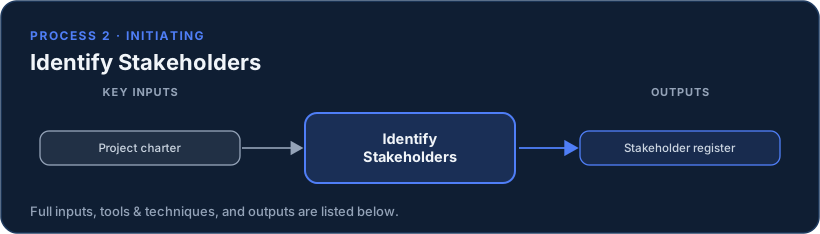
The PM analyzes power, interest, and attitude, and classifies stakeholders so engagement effort can be focused where it matters most. The output feeds nearly every other plan: communications, risk, and engagement strategies all depend on knowing who is in the picture.
Common pitfalls. Identifying only the obvious, friendly stakeholders; doing it once at kickoff and never revisiting; ignoring quiet but powerful stakeholders; and recording names without capturing what each one actually wants.
Inputs, Tools & Techniques, and Outputs
Inputs
- Project charter
- Business documents
- Project management plan
- Project documents
- Agreements
- Enterprise environmental factors
- Organizational process assets
Tools & Techniques
- Expert judgment
- Data gathering
- Data analysis
- Data representation
- Meetings
Outputs
- Stakeholder register
- Change requests
- Project management plan updates
- Project documents updates
How This Process Connects
Every process hands artifacts to other processes. Follow the flow of this one:
Where its inputs come from
- Conduct Procurementsproduces: Agreements
- Develop Project Charterproduces: Project charter
- Develop Project Management Planproduces: Project management plan
Where its outputs go
- Perform Integrated Change Controluses: Change requests
More in Project Stakeholder Management
In the Domains & Principles View
The PMBOK® Guide frames this work through performance domains and principles:
In the Eighth Edition
Identify Stakeholders keeps its name in the Eighth Edition. It is one of the 40 processes and sits in the Stakeholders performance domain.