The project management plan integrates every subsidiary plan — scope, schedule, cost, quality, resources, communications, risk, procurement, and stakeholder engagement — plus the baselines. The PM’s job is to make these parts consistent so they form one workable whole, not a stack of contradictory documents.
Key decisions include how much to plan up front versus progressively, what the baselines are, and how change will be controlled. The plan is developed collaboratively and tailored to the project; once baselined, it becomes the reference against which performance is judged.
Common pitfalls. A binder nobody reads; subsidiary plans that don’t reconcile, like a schedule the budget can’t fund; over-planning a project whose requirements will change; and treating the plan as fixed rather than something that evolves under change control.
Inputs, Tools & Techniques, and Outputs
Inputs
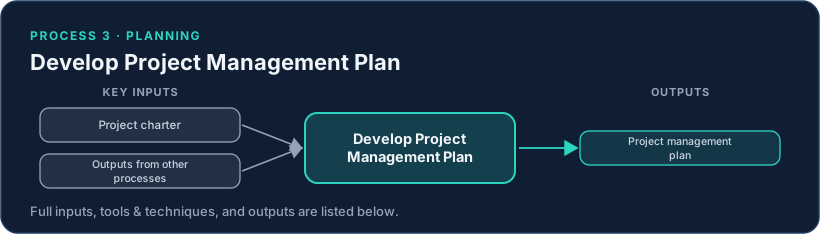
- Project charter
- Outputs from other processes
- Enterprise environmental factors
- Organizational process assets
Tools & Techniques
- Expert judgment
- Data gathering
- Interpersonal and team skills
- Meetings
Outputs
- Project management plan
How This Process Connects
Every process hands artifacts to other processes. Follow the flow of this one:
Where its inputs come from
- Develop Project Charterproduces: Project charter
Where its outputs go
- Identify Stakeholdersuses: Project management plan
- Plan Scope Managementuses: Project management plan
- Collect Requirementsuses: Project management plan
- Define Scopeuses: Project management plan
- Create WBSuses: Project management plan
- Plan Schedule Managementuses: Project management plan
More in Project Integration Management
In the Domains & Principles View
The PMBOK® Guide frames this work through performance domains and principles:
In the Eighth Edition
In the Eighth Edition, Develop Project Management Plan is renamed Integrate and Align Project Plans and sits in the Governance performance domain. Reframed from authoring one plan to integrating many components into a unified plan.