Before defining what is in the project, the team decides how scope itself will be managed: how requirements get collected, how the scope statement and WBS will be produced, and how scope changes will be validated and controlled. The output is guidance, not the scope itself.
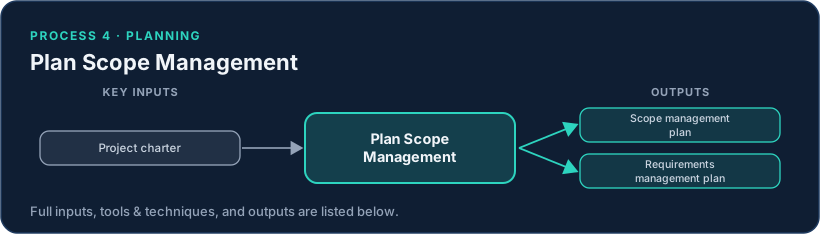
This is a short but important governance step. It establishes who approves scope changes and how scope creep will be prevented, so later disputes have a pre-agreed process to fall back on.
Common pitfalls. Skipping it and improvising scope control later; making the plan heavier than the project needs; and failing to agree up front how changes will be handled, which invites scope creep.
Inputs, Tools & Techniques, and Outputs
Inputs
- Project charter
- Project management plan
- Enterprise environmental factors
- Organizational process assets
Tools & Techniques
- Expert judgment
- Data analysis
- Meetings
Outputs
- Scope management plan
- Requirements management plan
How This Process Connects
Every process hands artifacts to other processes. Follow the flow of this one:
Where its inputs come from
- Develop Project Charterproduces: Project charter
- Develop Project Management Planproduces: Project management plan
More in Project Scope Management
In the Domains & Principles View
The PMBOK® Guide frames this work through performance domains and principles:
In the Eighth Edition
Plan Scope Management keeps its name in the Eighth Edition. It is one of the 40 processes and sits in the Scope performance domain.