This process turns stakeholder needs into clear, documented requirements. The team uses elicitation techniques — interviews, workshops, prototypes, observation — to surface what stakeholders actually need, not just what they first ask for, then documents, prioritizes, and traces it back to objectives.
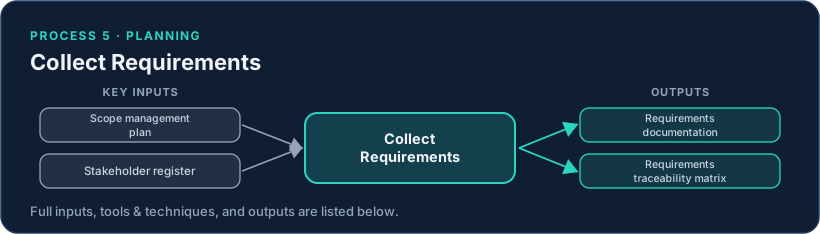
The traceability matrix links each requirement to its source and to the deliverables that satisfy it, which is what makes scope verifiable later. The hard part is reconciling conflicting requirements and separating genuine needs from wishes.
Common pitfalls. Accepting the first stated requirement without probing the real need; missing stakeholders and therefore requirements; ambiguous, untestable requirements; and no traceability, so no one can prove the product meets what was agreed.
Inputs, Tools & Techniques, and Outputs
Inputs
- Project charter
- Project management plan
- Project documents
- Business documents
- Agreements
- Enterprise environmental factors
- Organizational process assets
Tools & Techniques
- Expert judgment
- Data gathering
- Data analysis
- Decision making
- Data representation
- Interpersonal and team skills
- Context diagram
- Prototypes
Outputs
- Requirements documentation
- Requirements traceability matrix
How This Process Connects
Every process hands artifacts to other processes. Follow the flow of this one:
Where its inputs come from
- Conduct Procurementsproduces: Agreements
- Develop Project Charterproduces: Project charter
- Develop Project Management Planproduces: Project management plan
More in Project Scope Management
In the Domains & Principles View
The PMBOK® Guide frames this work through performance domains and principles:
In the Eighth Edition
In the Eighth Edition, Collect Requirements is renamed Elicit and Analyze Requirements and sits in the Scope performance domain. Adds explicit analysis; aligns with business-analysis practice.