Control Scope keeps the project’s scope on its baseline: it measures scope performance, detects variances, and ensures any changes go through integrated change control rather than slipping in unmanaged. The output feeds both the change process and overall performance reporting.
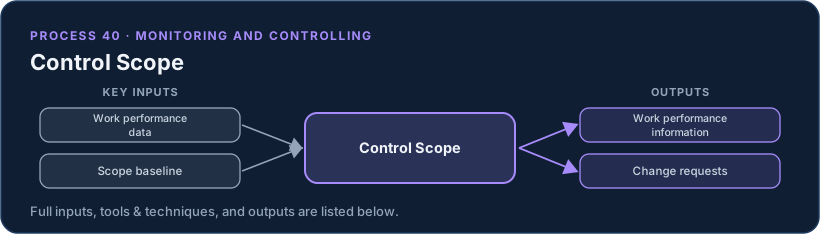
The aim is to manage, not prevent, change: legitimate changes are processed properly, while uncontrolled additions (scope creep) and unauthorized expansions (gold-plating) are caught. Variance and trend analysis show whether scope is drifting.
Common pitfalls. Letting small additions accumulate as unmanaged scope creep; gold-plating beyond requirements; processing scope changes without assessing schedule and cost impact; and having no baseline to measure against.
Inputs, Tools & Techniques, and Outputs
Inputs
- Project management plan
- Project documents
- Work performance data
- Organizational process assets
Tools & Techniques
- Data analysis
Outputs
- Work performance information
- Change requests
- Project management plan updates
- Project documents updates
How This Process Connects
Every process hands artifacts to other processes. Follow the flow of this one:
Where its inputs come from
- Direct and Manage Project Workproduces: Work performance data
- Develop Project Management Planproduces: Project management plan
Where its outputs go
- Monitor and Control Project Workuses: Work performance information
- Perform Integrated Change Controluses: Change requests
More in Project Scope Management
In the Domains & Principles View
The PMBOK® Guide frames this work through performance domains and principles:
In the Eighth Edition
In the Eighth Edition, Control Scope is renamed Monitor and Control Scope and sits in the Scope performance domain.