Control Schedule tracks how the project is progressing against the schedule baseline, measures variance, and forecasts the completion date. Earned value (schedule variance and SPI), trend analysis, and performance reviews show whether the project is on, ahead of, or behind plan.
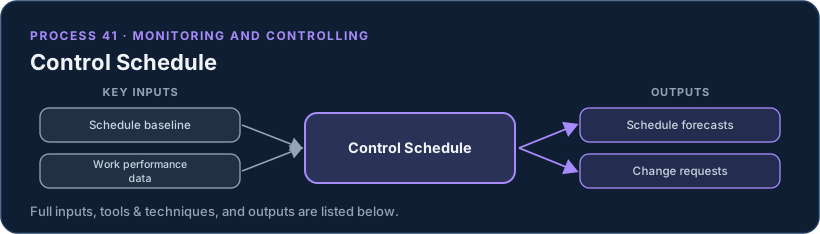
When the schedule slips, the PM evaluates options — resource changes, leads and lags, or compression like fast-tracking and crashing — and routes genuine baseline changes through integrated change control. The focus stays on the critical path and any path approaching it.
Common pitfalls. Updating percent-complete optimistically and hiding slippage; reacting to the end date only when it’s too late; changing the baseline informally; and ignoring near-critical paths until they become critical.
Inputs, Tools & Techniques, and Outputs
Inputs
- Project management plan
- Project documents
- Work performance data
- Organizational process assets
Tools & Techniques
- Data analysis
- Critical path method
- Project management information system
- Resource optimization
- Leads and lags
- Schedule compression
Outputs
- Work performance information
- Schedule forecasts
- Change requests
- Project management plan updates
- Project documents updates
How This Process Connects
Every process hands artifacts to other processes. Follow the flow of this one:
Where its inputs come from
- Direct and Manage Project Workproduces: Work performance data
- Develop Project Management Planproduces: Project management plan
Where its outputs go
- Monitor and Control Project Workuses: Work performance information
- Perform Integrated Change Controluses: Change requests
More in Project Schedule Management
In the Domains & Principles View
The PMBOK® Guide frames this work through performance domains and principles:
In the Eighth Edition
In the Eighth Edition, Control Schedule is renamed Monitor and Control Schedule and sits in the Schedule performance domain.