Control Costs tracks actual spending against the cost baseline and forecasts the final cost. Earned value analysis — cost variance, CPI, and estimate at completion — turns raw spend into an objective read on cost performance and a credible forecast.
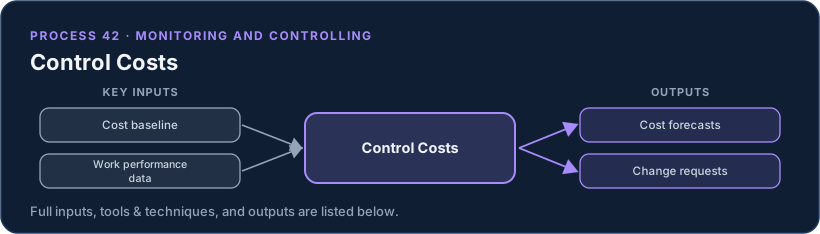
The to-complete performance index shows the efficiency the remaining work must achieve to finish on budget. As with schedule, only approved changes alter the baseline, and reserve analysis tracks how contingency is being consumed.
Common pitfalls. Tracking spend without earned value, so you can’t separate efficiency from raw burn; ignoring committed-but-unbilled costs; forecasting by gut instead of from CPI; and quietly absorbing overruns into reserve without analysis.
Inputs, Tools & Techniques, and Outputs
Inputs
- Project management plan
- Project documents
- Project funding requirements
- Work performance data
- Organizational process assets
Tools & Techniques
- Expert judgment
- Data analysis
- To-complete performance index
- Project management information system
Outputs
- Work performance information
- Cost forecasts
- Change requests
- Project management plan updates
- Project documents updates
How This Process Connects
Every process hands artifacts to other processes. Follow the flow of this one:
Where its inputs come from
- Determine Budgetproduces: Project funding requirements
- Direct and Manage Project Workproduces: Work performance data
- Develop Project Management Planproduces: Project management plan
Where its outputs go
- Monitor and Control Project Workuses: Work performance information
- Perform Integrated Change Controluses: Change requests
More in Project Cost Management
In the Domains & Principles View
The PMBOK® Guide frames this work through performance domains and principles:
In the Eighth Edition
In the Eighth Edition, Control Costs is renamed Monitor and Control Finances and sits in the Finance performance domain.