If Delivery is about the outputs, Project Work is about keeping the project running smoothly so those outputs can be produced. The project manager establishes fit-for-purpose processes, keeps physical resources and suppliers flowing, manages the stream of communications, and protects time for the team to learn and improve. Much of it is unglamorous, and it is exactly what stops a project from grinding to a halt.
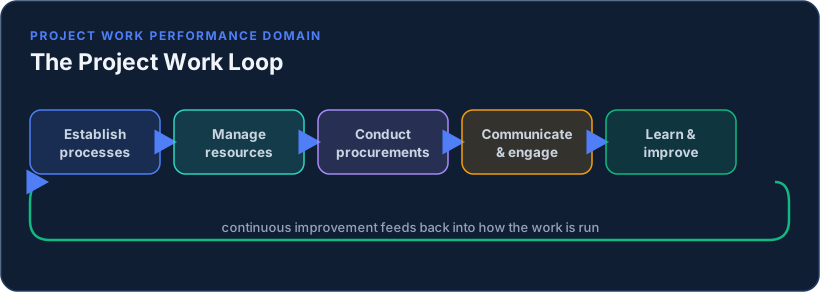
Day to day, this domain covers:
- Tailoring processes — set up just enough process for the project, and adjust it when it is not helping.
- Managing physical resources — materials, equipment, and logistics, with an eye on waste and rework.
- Running procurements — selecting and managing vendors so contracted work performs to plan.
- Keeping communication flowing — getting the right information to the right people at the right time.
- Managing knowledge — capturing lessons and making them usable so the team gets better, not just busier.
Common pitfalls. Heavyweight process for its own sake; letting procurement or resource lead times blindside the schedule; communication that is high in volume but low in clarity; and treating lessons learned as a closeout formality instead of something acted on during the project.
Outcomes to Expect
- Efficient and effective project performance
- Project processes are appropriate for the project and the environment
- Appropriate communication with stakeholders
- Efficient management of physical resources
- Effective management of procurements
- Improved team capability due to continuous learning and process improvement
Checking the Outcomes
- Status reports show that project work is efficient and effective.
- Evidence shows that the project processes have been tailored to meet the needs of the project and the environment. Process audits and quality assurance activities show that the processes are relevant and being used effectively.
- The project communications management plan and communication artifacts demonstrate that the planned communications are being delivered to stakeholders. There are few ad hoc requests for information or misunderstandings that might indicate engagement and communication activities are not effective.
- The amount of material used, scrap discarded, and amount of rework indicate that resources are being used efficiently.
- A procurement audit demonstrates that appropriate processes utilized were sufficient for the procurement and that the contractor is performing to plan.
- Projects using a predictive approach have a change log that demonstrates changes are being evaluated holistically with consideration for scope, schedule, budget, resource, stakeholder, and risk impacts. Projects using an adaptive approach have a backlog that shows the rate of accomplishing scope and the rate of adding new scope.
- Team status reports show fewer errors and rework with an increase in velocity.
How It Interacts with the Other Domains
Project Work is where the Planning domain's baselines meet reality, and it hands finished work to the Delivery domain. It leans heavily on the Team domain (the people doing the work) and the Stakeholder domain (the communication and engagement it carries out), and it constantly interacts with the Uncertainty domain as issues and changes arise mid-flight. The Measurement domain watches its efficiency and feeds back signals that prompt process adjustments.
Principles Behind This Domain
In the Process View
The processes that do the day-to-day work of this domain:
In the Eighth Edition
Our reading of the Eighth Edition: The Project Work domain is absorbed mainly into the Governance domain, through three processes: Manage Project Execution, Assess and Implement Changes, and Manage Project Knowledge. Physical resources move to Resources, and procurement to Appendix X4.