Quality is the degree to which deliverables meet requirements and satisfy stated or implied needs. This principle pushes quality upstream: make the processes that produce the work fit-for-purpose, so quality is engineered in along the way instead of discovered — and expensively fixed — at the end.
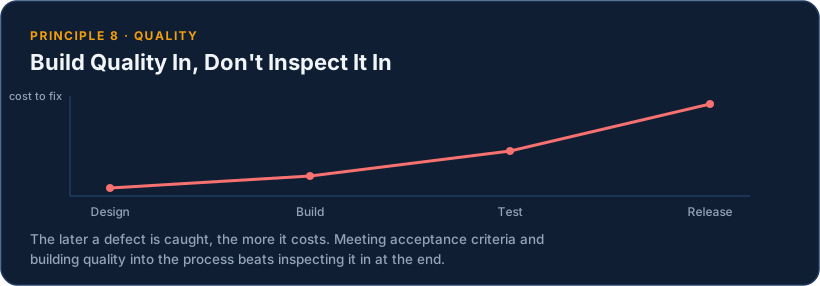
Quality has two faces: conformance to acceptance criteria and fitness for use, and both are cheaper to achieve early. A defect caught at design costs a fraction of the same defect found after release, in money and in trust. Clear acceptance criteria, good process, and early feedback are what make building it in practical.
Common misunderstanding. Higher quality does not mean gold-plating. Quality is meeting the agreed requirements and needs — adding polish nobody asked for is waste, not quality.
Where This Principle Shows Up
The domains and knowledge areas where this principle does its heaviest lifting:
In the Eighth Edition
In the Eighth Edition, Build Quality Into Processes and Deliverables becomes Embed Quality Into Processes and Deliverables. PMI’s reasoning, paraphrased: Quality spans both the outputs described in the performance domains and the outcomes.