Monitor Risks keeps the risk picture current: it tracks whether responses are working, watches identified risks for changes, identifies emerging risks, and checks that risk processes are still effective. It produces work performance information and feeds change requests.
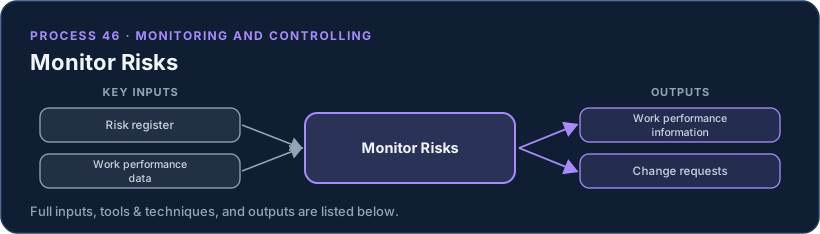
Reserve analysis shows whether contingency is adequate for the remaining risk, and audits assess whether the risk process itself is delivering value. The output keeps reserves, responses, and the risk report aligned with reality.
Common pitfalls. Letting the risk register go stale; tracking old risks while missing emerging ones; assuming responses are working without checking; and never auditing whether the risk process is actually adding value.
Inputs, Tools & Techniques, and Outputs
Inputs
- Project management plan
- Project documents
- Work performance data
- Work performance reports
Tools & Techniques
- Data analysis
- Audits
- Meetings
Outputs
- Work performance information
- Change requests
- Project management plan updates
- Project documents updates
- Organizational process assets updates
How This Process Connects
Every process hands artifacts to other processes. Follow the flow of this one:
Where its inputs come from
- Monitor and Control Project Workproduces: Work performance reports
- Direct and Manage Project Workproduces: Work performance data
- Develop Project Management Planproduces: Project management plan
Where its outputs go
- Monitor and Control Project Workuses: Work performance information
- Perform Integrated Change Controluses: Change requests
More in Project Risk Management
In the Domains & Principles View
The PMBOK® Guide frames this work through performance domains and principles:
In the Eighth Edition
Monitor Risks keeps its name in the Eighth Edition. It is one of the 40 processes and sits in the Risk performance domain.