Develop Team builds the skills, relationships, and environment that let a group perform as a team. The PM uses team-building activities, training, recognition, and sometimes colocation or virtual-team tools to move the team through the stages of development toward high performance.
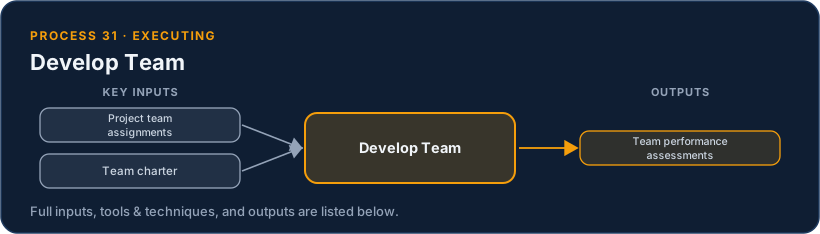
It is ongoing, not a kickoff event. Team performance assessments gauge progress — technical capability, cohesion, turnover — and guide where to invest next. Recognition and rewards that fit the culture reinforce the behaviors you want.
Common pitfalls. Treating team building as a one-off offsite; rewarding individuals in ways that undercut teamwork; ignoring the extra effort virtual and distributed teams need; and cutting development when schedule pressure hits, which usually backfires.
Inputs, Tools & Techniques, and Outputs
Inputs
- Project management plan
- Project documents
- Enterprise environmental factors
- Organizational process assets
Tools & Techniques
- Colocation
- Virtual teams
- Communication technology
- Conflict management
- Recognition and rewards
- Training
- Individual and team assessments
- Meetings
Outputs
- Team performance assessments
- Change requests
- Project management plan updates
- Project documents updates
- Enterprise environmental factors updates
- Organizational process assets updates
How This Process Connects
Every process hands artifacts to other processes. Follow the flow of this one:
Where its inputs come from
- Develop Project Management Planproduces: Project management plan
Where its outputs go
- Manage Teamuses: Team performance assessments
- Perform Integrated Change Controluses: Change requests
More in Project Resource Management
In the Domains & Principles View
The PMBOK® Guide frames this work through performance domains and principles:
In the Eighth Edition
In the Eighth Edition, Develop Team is merged with Manage Team into one process, Lead the Team, in the Resources performance domain. Develop + Manage collapse into one leadership process — the process-level echo of the Be an Accountable Leader principle.