A team is not the same thing as a group of people assigned to a project. The project manager’s job here is to create the environment — psychological safety, a shared vision, agreed norms — in which a diverse set of individuals becomes a team that owns its results. Crucially, leadership is treated as a behavior anyone can show, not a title only the PM holds.
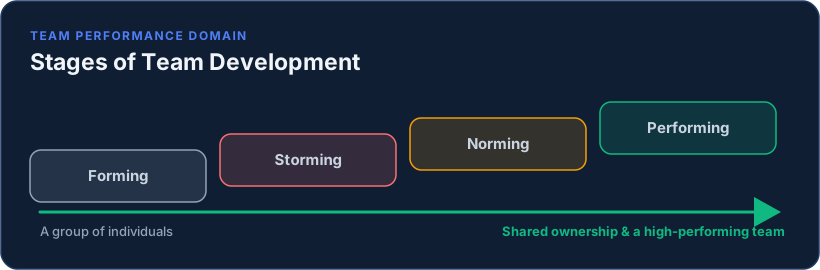
In practice the PM works on several fronts at once:
- Set a shared vision — make sure every member can state what the project is for and what done looks like.
- Build trust and safety — make it safe to raise problems, disagree, and admit mistakes early.
- Grow the team — coach skills, hand over meaningful work, and recognize contributions.
- Distribute leadership — let members lead in their areas of strength instead of funneling every decision through the PM.
- Adapt the style — match a directive, coaching, or servant-leadership stance to what the people and situation need.
Common pitfalls. Skipping the storming stage by suppressing conflict, which only buries it; rewarding individual heroics over collective ownership; mistaking busyness for high performance; and a PM who hoards decisions, leaving the team unable to function when they step away.
Outcomes to Expect
- Shared ownership
- A high-performing team
- Applicable leadership and other interpersonal skills demonstrated by all team members
Checking the Outcomes
- All project team members know the vision and objectives. The project team owns the deliverables and outcomes of the project.
- The project team trusts each other and collaborates. The project team adapts to changing situations and is resilient in the face of challenges. The project team feels empowered and empowers and recognizes members of the project team.
- Project team members apply critical thinking and interpersonal skills. Project team member leadership styles are appropriate to the project context and environment.
How It Interacts with the Other Domains
The Team domain is the engine behind most other domains: the same trust and communication skills it builds are what make Stakeholder engagement work, and a high-performing team is what actually executes the Project Work and Delivery domains. It is shaped by the Development Approach and Life Cycle domain, since adaptive approaches demand more self-organization and shared leadership than predictive ones, and it feeds the Uncertainty domain, because a psychologically safe team surfaces risks and bad news early instead of hiding them.
Principles Behind This Domain
In the Process View
The processes that do the day-to-day work of this domain:
In the Eighth Edition
Our reading of the Eighth Edition: The Eighth Edition has no Team domain: people become one kind of resource, under the Resources domain. Team development now sits mainly in the Lead the Team process, and the cultural side moves into two principles, Be an Accountable Leader and Build an Empowered Culture.