Measurement assesses performance and triggers the right responses to keep the project on track. The project manager picks a small set of meaningful measures, tied to what stakeholders care about, and uses them to see reality clearly and decide early. The test of a good measure is not precision for its own sake — it is whether it leads to a better, more timely decision.
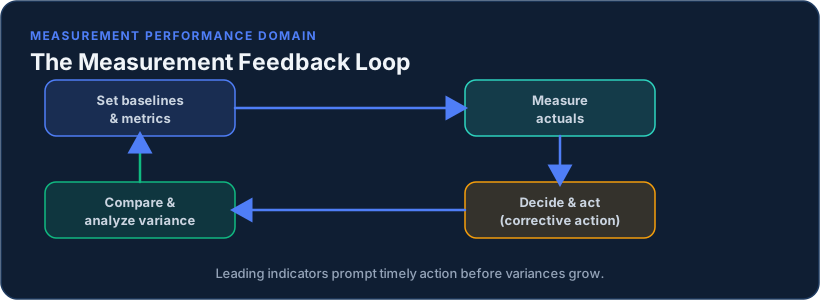
Effective measurement involves:
- Choosing the right metrics — a balanced, minimal set that reflects value, not vanity numbers.
- Baselining — establishing what on-plan looks like so variance is meaningful.
- Favoring leading indicators — signals that warn early, not just lagging results that confirm what already happened.
- Visualizing clearly — dashboards and information radiators that make status obvious at a glance.
- Acting on the data — using forecasts and variances to make decisions, not just to report.
Common pitfalls. Measuring what is easy instead of what matters; drowning in metrics no one acts on; watermelon reporting that is green on the outside and red inside; and trusting forecasts without ever checking past forecasts against what actually happened.
Outcomes to Expect
- A reliable understanding of the status of the project
- Actionable data to facilitate decision making
- Timely and appropriate actions to keep project performance on track
- Achieving targets and generating business value by making informed and timely decisions based on reliable forecasts and evaluations
Checking the Outcomes
- Audit measurements and reports demonstrate if data is reliable.
- Measurements indicate whether the project is performing as expected or if there are variances.
- Measurements provide leading indicators and/or current status leads to timely decisions and actions.
- Reviewing past forecasts and current performance demonstrates if previous forecasts reflect the present accurately. Comparing the actual performance to the planned performance and evaluating business documents will show the likelihood of achieving intended value from the project.
How It Interacts with the Other Domains
Measurement watches every other domain and closes the loop back to Planning, comparing actual progress against the baselines planning produced. It draws signals from the Project Work and Delivery domains, informs the Uncertainty domain by flagging emerging variances as risks, and supports the Stakeholder domain by providing the credible status information that sustains trust. The Development Approach domain shapes which measures apply — earned value in predictive work, throughput and velocity in adaptive work.
Principles Behind This Domain
In the Process View
The processes that do the day-to-day work of this domain:
In the Eighth Edition
Our reading of the Eighth Edition: The Measurement domain is absorbed into the Governance domain, whose key concepts now cover leading and lagging indicators and SMART criteria, feeding Monitor and Control Project Performance. The earned value calculations move to Section 5 and reappear in Finance.