Estimate Costs assigns a cost to each activity or work package using the same family of techniques as durations — analogous, parametric, bottom-up, three-point. It accounts for labor, materials, equipment, services, and contingency, and records the basis of estimates so the reasoning is auditable.
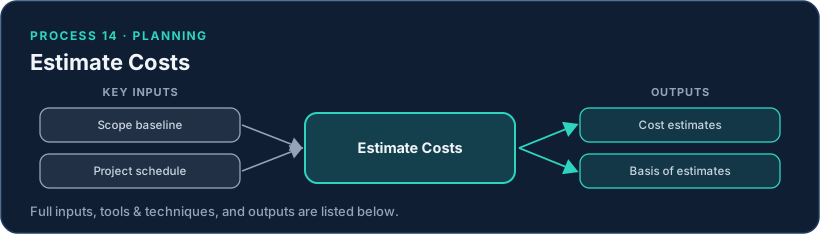
Estimates are refined as the project progresses and more is known, moving from rough order-of-magnitude toward definitive. Reserve analysis separates contingency, for known risks, from the work itself.
Common pitfalls. Treating an early rough estimate as a firm commitment; omitting indirect costs and contingency; inconsistent units or assumptions across estimates; and no basis of estimates, so numbers can’t be defended or revisited.
Inputs, Tools & Techniques, and Outputs
Inputs
- Project management plan
- Project documents
- Enterprise environmental factors
- Organizational process assets
Tools & Techniques
- Expert judgment
- Analogous estimating
- Parametric estimating
- Bottom-up estimating
- Three-point estimating
- Data analysis
- Project management information system
- Decision making
Outputs
- Cost estimates
- Basis of estimates
- Project documents updates
How This Process Connects
Every process hands artifacts to other processes. Follow the flow of this one:
Where its inputs come from
- Develop Project Management Planproduces: Project management plan
More in Project Cost Management
In the Domains & Principles View
The PMBOK® Guide frames this work through performance domains and principles:
In the Eighth Edition
Estimate Costs keeps its name in the Eighth Edition. It is one of the 40 processes and sits in the Finance performance domain.