Determine Budget rolls activity and work-package costs up through the WBS, adds contingency reserves, and produces the cost baseline — the time-phased budget against which performance is measured. Management reserves sit above the baseline. It also establishes funding requirements, since money is often released in stages.
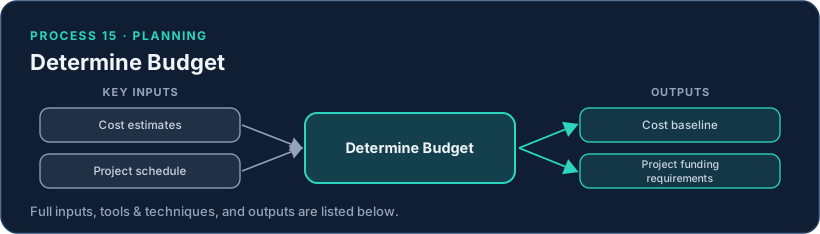
Funding limit reconciliation aligns planned spending with the funding actually available, which can force rescheduling of work. The baseline excludes management reserves but includes contingency.
Common pitfalls. Confusing the cost baseline with the total budget, which also holds management reserve; a baseline that ignores funding limits and timing; and burying reserves so later variance analysis becomes meaningless.
Inputs, Tools & Techniques, and Outputs
Inputs
- Project management plan
- Project documents
- Business documents
- Agreements
- Enterprise environmental factors
- Organizational process assets
Tools & Techniques
- Expert judgment
- Cost aggregation
- Data analysis
- Historical information review
- Funding limit reconciliation
- Financing
Outputs
- Cost baseline
- Project funding requirements
- Project documents updates
How This Process Connects
Every process hands artifacts to other processes. Follow the flow of this one:
Where its inputs come from
- Conduct Procurementsproduces: Agreements
- Develop Project Management Planproduces: Project management plan
Where its outputs go
- Control Costsuses: Project funding requirements
More in Project Cost Management
In the Domains & Principles View
The PMBOK® Guide frames this work through performance domains and principles:
In the Eighth Edition
In the Eighth Edition, Determine Budget is renamed Develop Budget and sits in the Finance performance domain.