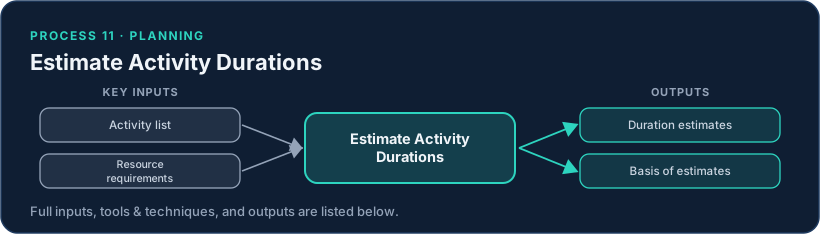
This process estimates the number of work periods each activity needs, based on scope, resource requirements, and historical data. The team chooses estimating techniques — analogous, parametric, three-point, bottom-up — and records not just the numbers but the basis of estimates, so the assumptions behind them stay visible.
Good estimates express uncertainty as a range rather than a single point, and reserve analysis sets aside contingency for known risks. The PM avoids treating an estimate as a commitment until it has been validated against resources and dependencies.
Common pitfalls. Single-point estimates that hide uncertainty; padding buried inside estimates instead of explicit reserves; ignoring resource availability and productivity; and reusing analogous estimates from genuinely different work.
Inputs, Tools & Techniques, and Outputs
Inputs
- Project management plan
- Project documents
- Enterprise environmental factors
- Organizational process assets
Tools & Techniques
- Expert judgment
- Analogous estimating
- Parametric estimating
- Three-point estimating
- Bottom-up estimating
- Data analysis
- Decision making
- Meetings
Outputs
- Duration estimates
- Basis of estimates
- Project documents updates
How This Process Connects
Every process hands artifacts to other processes. Follow the flow of this one:
Where its inputs come from
- Develop Project Management Planproduces: Project management plan
More in Project Schedule Management
In the Domains & Principles View
The PMBOK® Guide frames this work through performance domains and principles:
In the Eighth Edition
In the Eighth Edition, Estimate Activity Durations is merged with Define Activities, Sequence Activities, and Develop Schedule into one process, Develop Schedule, in the Schedule performance domain. The single biggest consolidation in the edition: 4 processes to 1. Schedule drops from 6 processes to 3.