Conduct Procurements solicits and evaluates seller responses and awards contracts. The team may run bidder conferences, evaluate proposals against the source-selection criteria, negotiate terms, and finalize agreements that become a key input to managing the work.
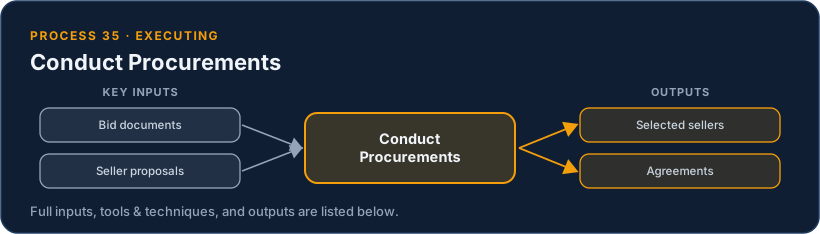
Fair, transparent evaluation matters both for getting the best seller and for defensibility. Negotiation balances price with the terms that allocate risk appropriately between buyer and seller.
Common pitfalls. Selecting on price alone and ignoring risk and capability; ambiguous agreements that cause disputes later; rushing evaluation under time pressure; and weak negotiation that leaves the buyer exposed.
Inputs, Tools & Techniques, and Outputs
Inputs
- Project management plan
- Project documents
- Procurement documentation
- Seller proposals
- Enterprise environmental factors
- Organizational process assets
Tools & Techniques
- Expert judgment
- Advertising
- Bidder conferences
- Data analysis
- Interpersonal and team skills
Outputs
- Selected sellers
- Agreements
- Change requests
- Project management plan updates
- Project documents updates
- Organizational process assets updates
How This Process Connects
Every process hands artifacts to other processes. Follow the flow of this one:
Where its inputs come from
- Develop Project Management Planproduces: Project management plan
Where its outputs go
- Perform Integrated Change Controluses: Change requests
- Develop Project Charteruses: Agreements
- Identify Stakeholdersuses: Agreements
- Collect Requirementsuses: Agreements
- Develop Scheduleuses: Agreements
- Determine Budgetuses: Agreements
More in Project Procurement Management
In the Domains & Principles View
The PMBOK® Guide frames this work through performance domains and principles:
In the Eighth Edition
Conduct Procurements is not one of the Eighth Edition’s 40 processes. Procurement moves out of the process set into Appendix X4: Procurement.