Stewardship is the recognition that a project manager is entrusted with things that belong to others: the sponsor’s money, the organization’s reputation, the team’s time and wellbeing, and the wider community affected by the work. The principle asks you to treat all of it responsibly, both inside the organization and beyond it.
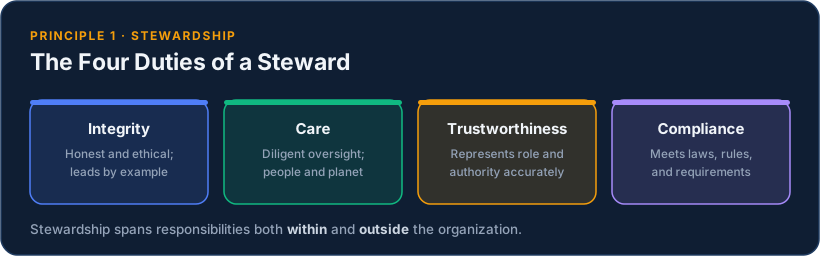
PMBOK frames stewardship around four duties:
- Integrity — behave honestly and ethically, hold yourself to a high standard, and act as a role model; be willing to challenge words and actions that don’t align with stated values.
- Care — diligently oversee what’s in your charge as if it were your own, create a transparent environment where people can raise concerns without fear, and surface the potential downsides of project outcomes.
- Trustworthiness — represent your role, your authority, and your team accurately, and proactively flag conflicts of interest before they erode trust.
- Compliance — meet the laws, rules, and requirements that apply, and seek counsel when guidelines conflict rather than guessing.
Stewardship runs in two directions. Within the organization it means aligning with strategy, engaging and fairly treating the team, and overseeing finances and resources with diligence. Outside the organization it extends to environmental sustainability, relationships with partners, the project’s impact on the market and community, and advancing the profession.
In practice. Raise concerns early when resources are being misused; advocate for your team when workloads turn unsustainable; be honest about risks and bad news; and make decisions as though you’ll be held accountable for them — because you will.
A common misunderstanding is that stewardship is just financial accountability or compliance box-ticking. It is broader: an ethical posture that weighs social and environmental impact alongside cost and schedule, and treats trust as something to be earned and protected throughout the project.
Where This Principle Shows Up
The domains and knowledge areas where this principle does its heaviest lifting:
In the Eighth Edition
In the Eighth Edition, Be a Diligent, Respectful, and Caring Steward is merged with Demonstrate Leadership Behaviors into one principle, Be an Accountable Leader. PMI’s reasoning, paraphrased: Clarifies which leadership behaviors actually drive project success; stewardship is treated as one such behavior and folded into professional accountability.