This process decides how the schedule will be built and governed: the scheduling method and tool, the level of accuracy and units, control thresholds, and how schedule performance will be measured. The output is the schedule management plan — guidance, not the schedule itself.
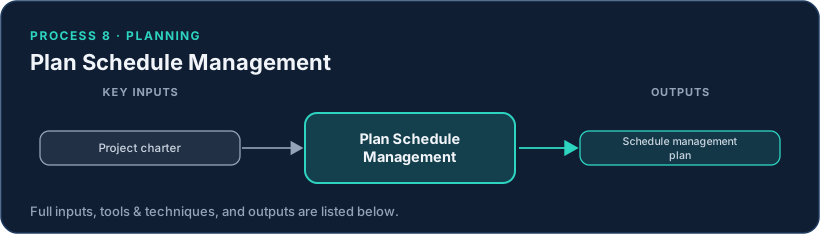
It is a quick but consequential step: the choices here, such as how much schedule reserve to allow or what variance triggers action, shape how the team responds when reality diverges from the plan.
Common pitfalls. Skipping it and letting scheduling conventions vary by person; setting no control thresholds, so it is unclear when a slip matters; and over-engineering the approach for a small project.
Inputs, Tools & Techniques, and Outputs
Inputs
- Project charter
- Project management plan
- Enterprise environmental factors
- Organizational process assets
Tools & Techniques
- Expert judgment
- Data analysis
- Meetings
Outputs
- Schedule management plan
How This Process Connects
Every process hands artifacts to other processes. Follow the flow of this one:
Where its inputs come from
- Develop Project Charterproduces: Project charter
- Develop Project Management Planproduces: Project management plan
More in Project Schedule Management
In the Domains & Principles View
The PMBOK® Guide frames this work through performance domains and principles:
In the Eighth Edition
Plan Schedule Management keeps its name in the Eighth Edition. It is one of the 40 processes and sits in the Schedule performance domain.